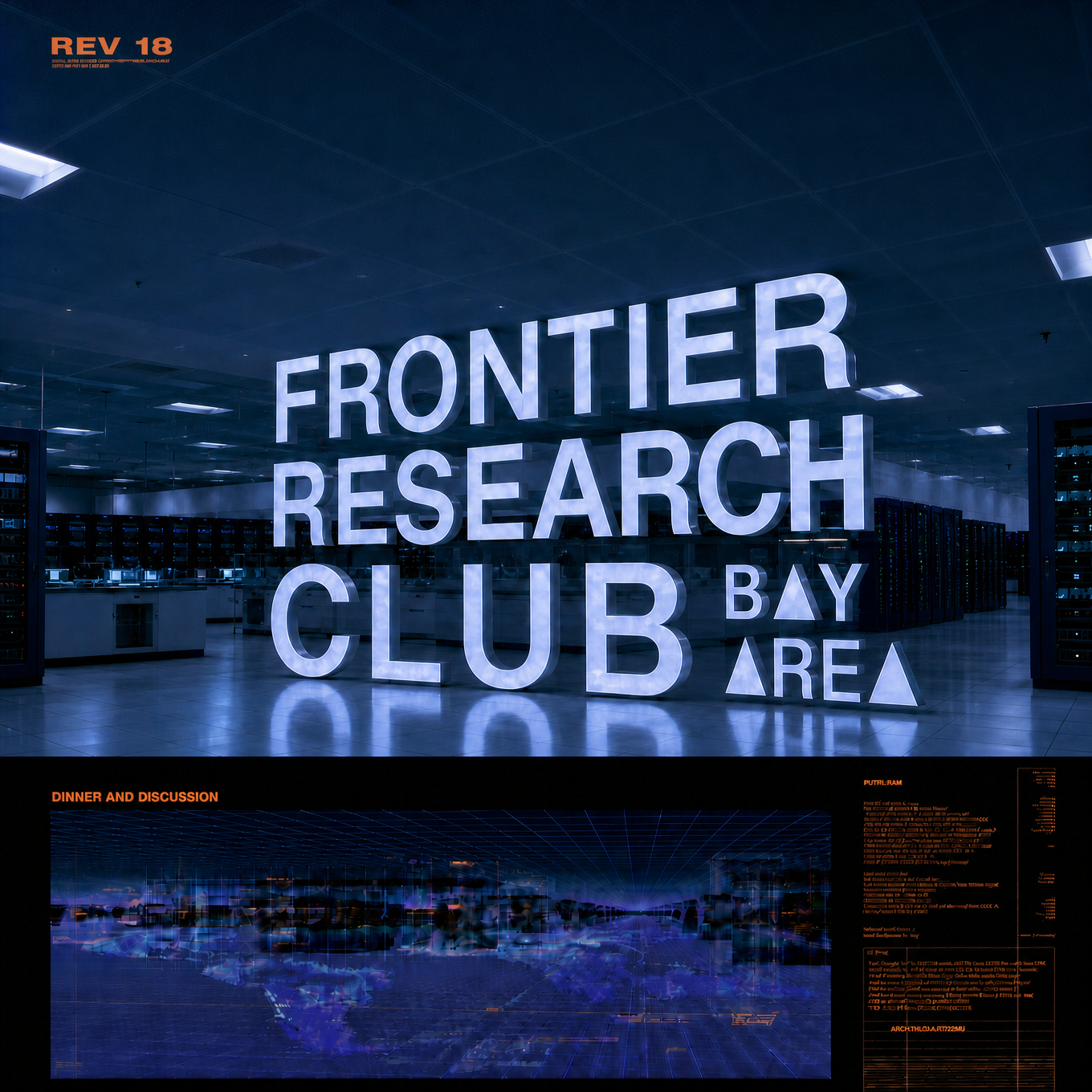
Bay Area Frontier Research Club #18 | The Cost of Intelligence (dinner + paper discussion @ Pebblebed)
About This Event
Every conversation about AI eventually becomes a conversation about cost.
Training gets the headlines. Serving decides what ships. In between sits the least glamorous, most consequential work in the field: kernels, memory bandwidth, quantization, adaptive computation — the machinery that determines what a token actually costs, and therefore which products get to exist.
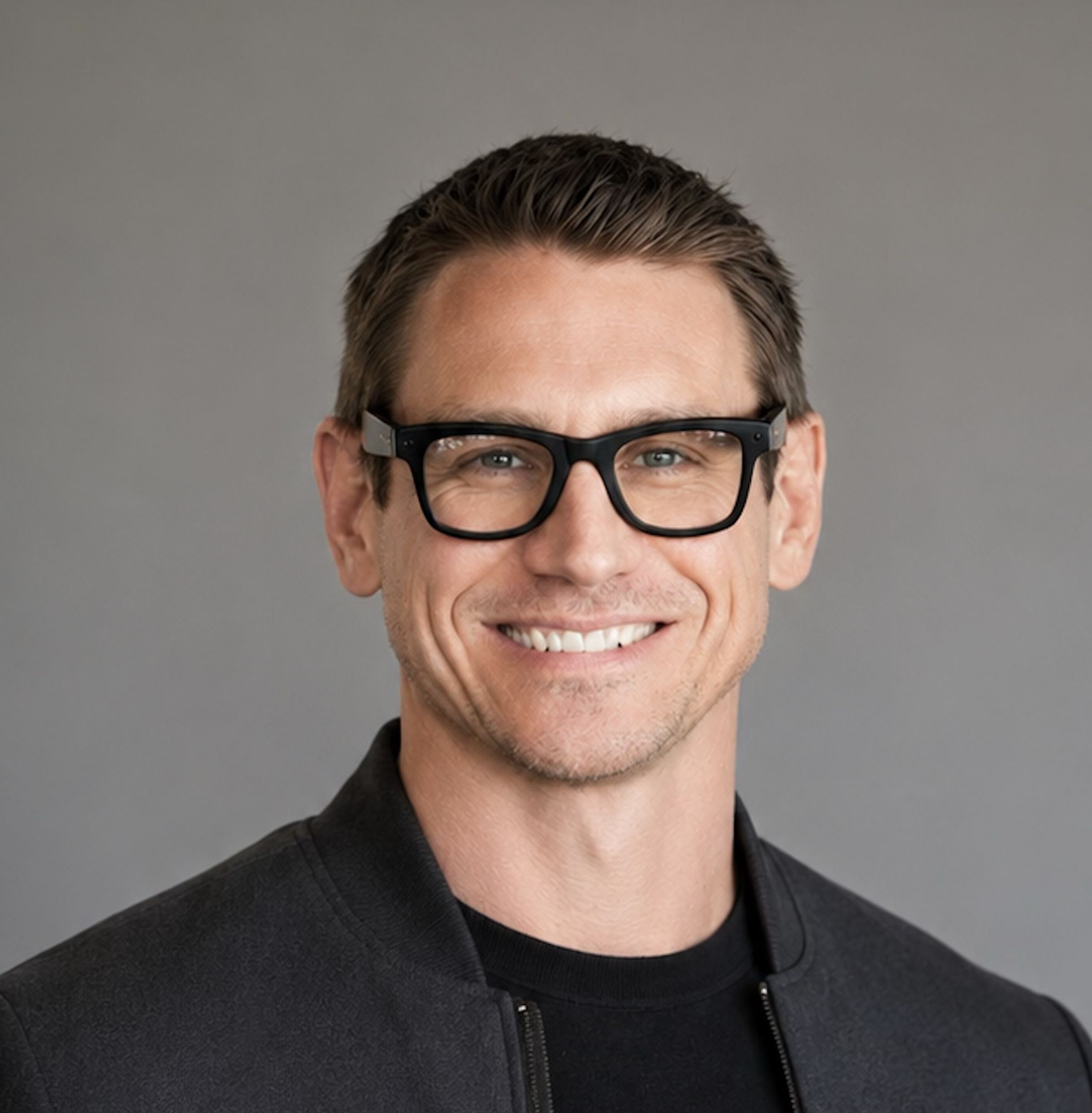
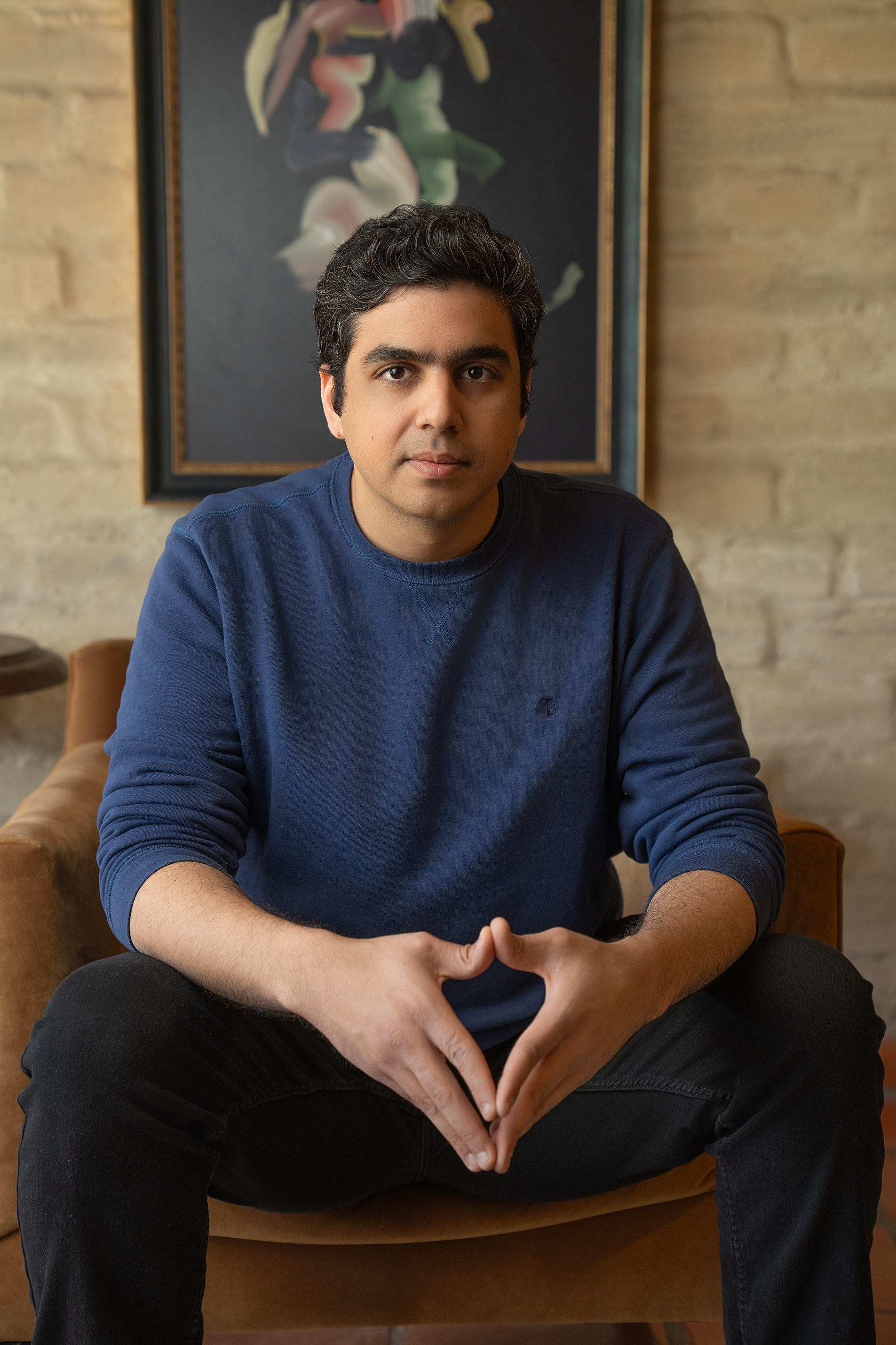
This session examines the cost frontier from both ends. From the systems side: Coleman Hooper (UC Berkeley) on serving long context without buying more HBM — the KV-cache quantization work behind KVQuant, SqueezedAttention, and Multipole Attention. From the automation side: Vignesh Baskaran (Hexo Labs) on SIA, a self-improvement loop that rewrites its own GPU kernels — and the question of how much of the optimization stack can optimize itself.
Short talks. Long arguments. Papers circulated in advance.
The Frontier Research Club is a curated forum for rigorous, technical discussion at the frontier of AI. We convene researchers from the frontier labs, Stanford, Berkeley, and the teams building in production to examine concrete work — papers, methods, and results — with a bias toward assumptions, evaluation methodology, failure modes, and what would count as convincing evidence.
Presentations are intentionally brief so the majority of the evening belongs to questions and critique.
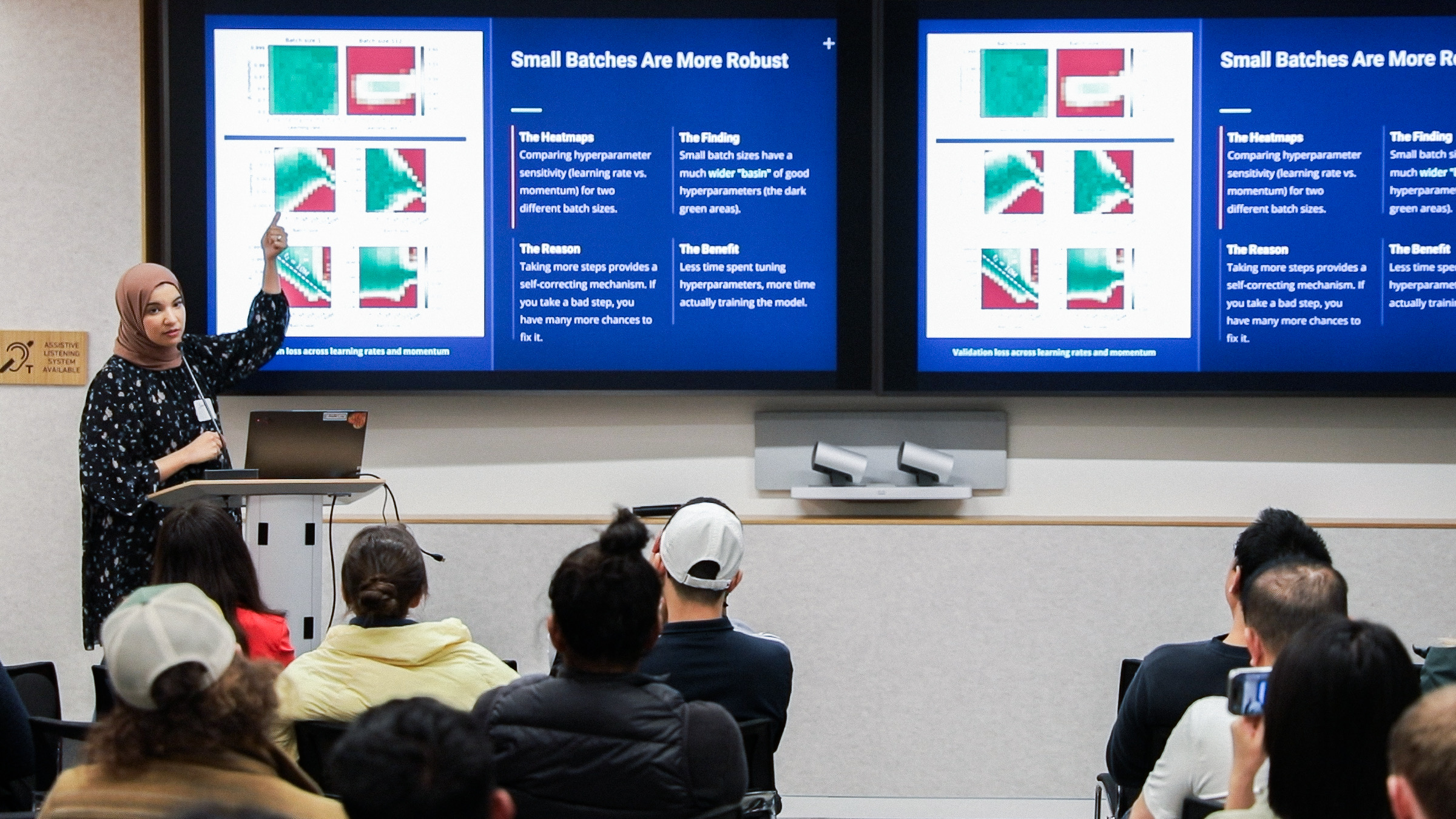
Agenda
5:30pm: Doors open
5:30pm – 6:30pm: Networking + light dinner
6:30pm – 8:00pm: Research presentations + discussion
8:00pm – 8:30pm: Networking
Presenters & topics
Talk 1 — The Improvement Loop Meets the Cost Curve
Vignesh Baskaran · Co-founder & CTO, Hexo Labs
Hand-tuning the AI stack — model choice, harness, tools, memory, kernels — is expensive, slow, and permanently behind. SIA is the first open-source framework to update both the harness AND the model weights of a task-specific agent inside a single self-improvement loop. Vignesh will walk through what the loop actually does, where it works and where it fails, and the results across domains: a 56.6% gain on LawBench, 91.9% GPU-kernel runtime reduction, 502% improvement on single-cell RNA denoising, and state-of-the-art marks on MLE-Bench — plus AIE-Bench, a benchmark for whether agents can build and improve other agents. The claim under examination: cost-performance optimization is becoming something the stack does to itself.
Paper: SIA (arXiv:2605.27276) · Code: github.com/hexo-ai/sia
Bio: Vignesh Baskaran is co-founder & CTO of Hexo Labs, a neolab for recursive self-improving AI. Before Hexo he scaled an applied-ML team through acquisition by Clarivate, and he ranks in the top 1% of Kaggle competitors worldwide.
Talk 2 — Serving Long Context Without Buying More HBM: KV-Cache Quantization
Coleman Hooper · UC Berkeley
Long context died a memory death — until quantization. Coleman is lead author of KVQuant (NeurIPS 2024), which pushed KV caches to ultra-low precision and enabled ~10M-token context on hardware that had no business serving it, and co-lead of SqueezeLLM (ICML 2024). His recent work — Squeezed Attention (ACL 2025) and Multipole Attention (NeurIPS 2025) — extends the same question to long-context reasoning: up to 4.5x attention speedups by computing exact attention only where it matters. He'll cover what quantization buys, what it silently breaks, and how efficient-inference claims should be evaluated.
Bio: Coleman Hooper is a postdoctoral scholar at UC Berkeley working with Kurt Keutzer (BAIR) and Sophia Shao (SLICE) in the SqueezeAILab group, on efficient LLM inference and AI systems.
Pre-reads circulated to approved attendees before the event.
Want to present your work?
If you have a research paper you’d like to discuss at one of our next sessions, please submit it for consideration.
Submit your paper here!
Who should attend
Researchers in efficient ML — quantization, KV-cache, sparsity, adaptive compute, kernels
Inference, serving, and ML-platform engineers running training or serving at scale
Systems and hardware people who think in memory bandwidth and $/token
Founders building AI infrastructure and tooling
Investors backing AI infrastructure
Capacity is limited.
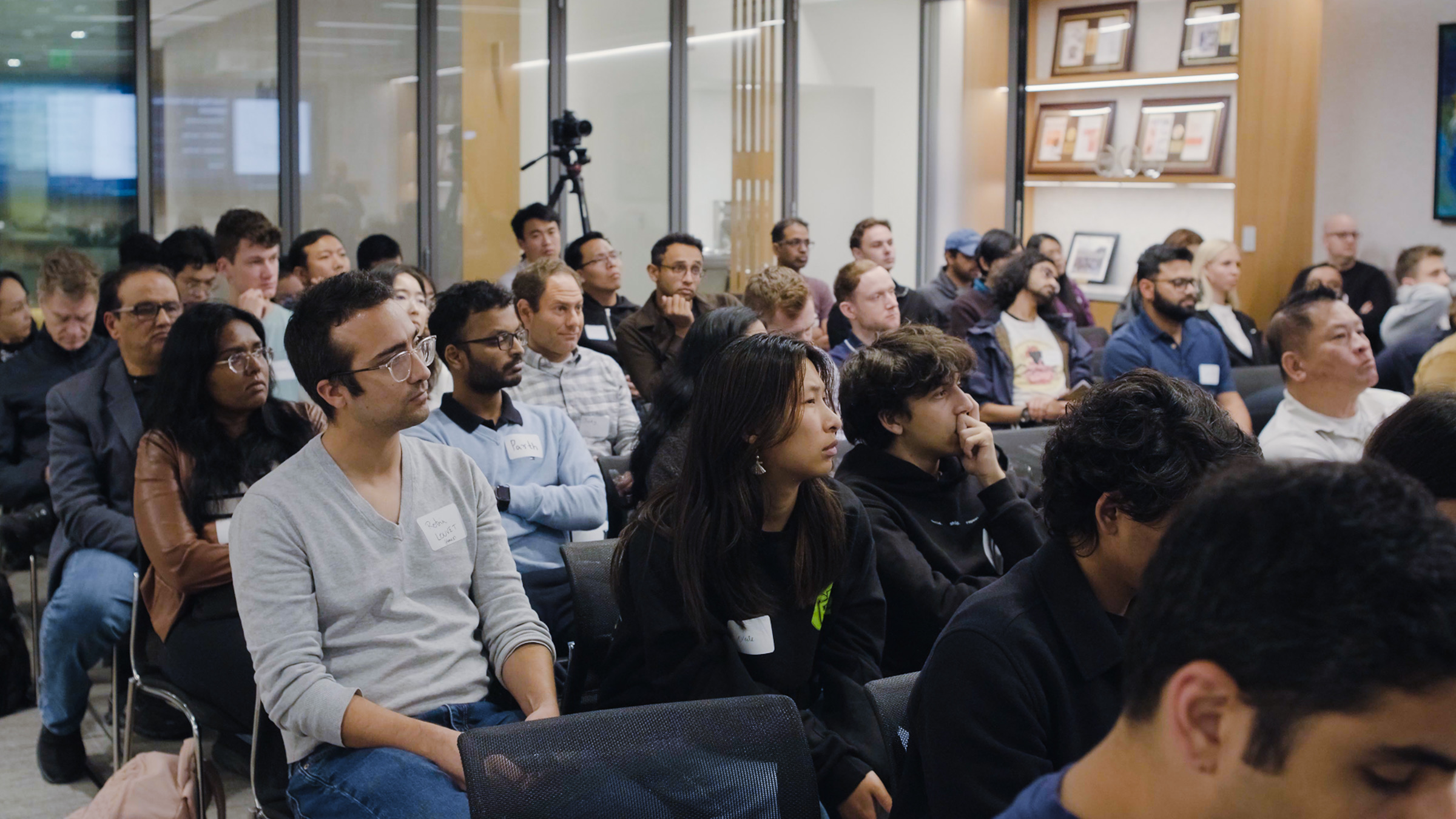
We will take photos and short video clips for event recap and promotion. By attending, you consent to being photographed and recorded, and to the use of those images and clips by the organizers on social media and other event marketing channels.
🌐 Connect with Frontier Research Club
Luma Calendar: luma.com/frontiersyndicate
YouTube: youtube.com/@FrontierResearchClub
Instagram: @frontierresearchclub
Email: kristopher@frontiersyndicate.vc
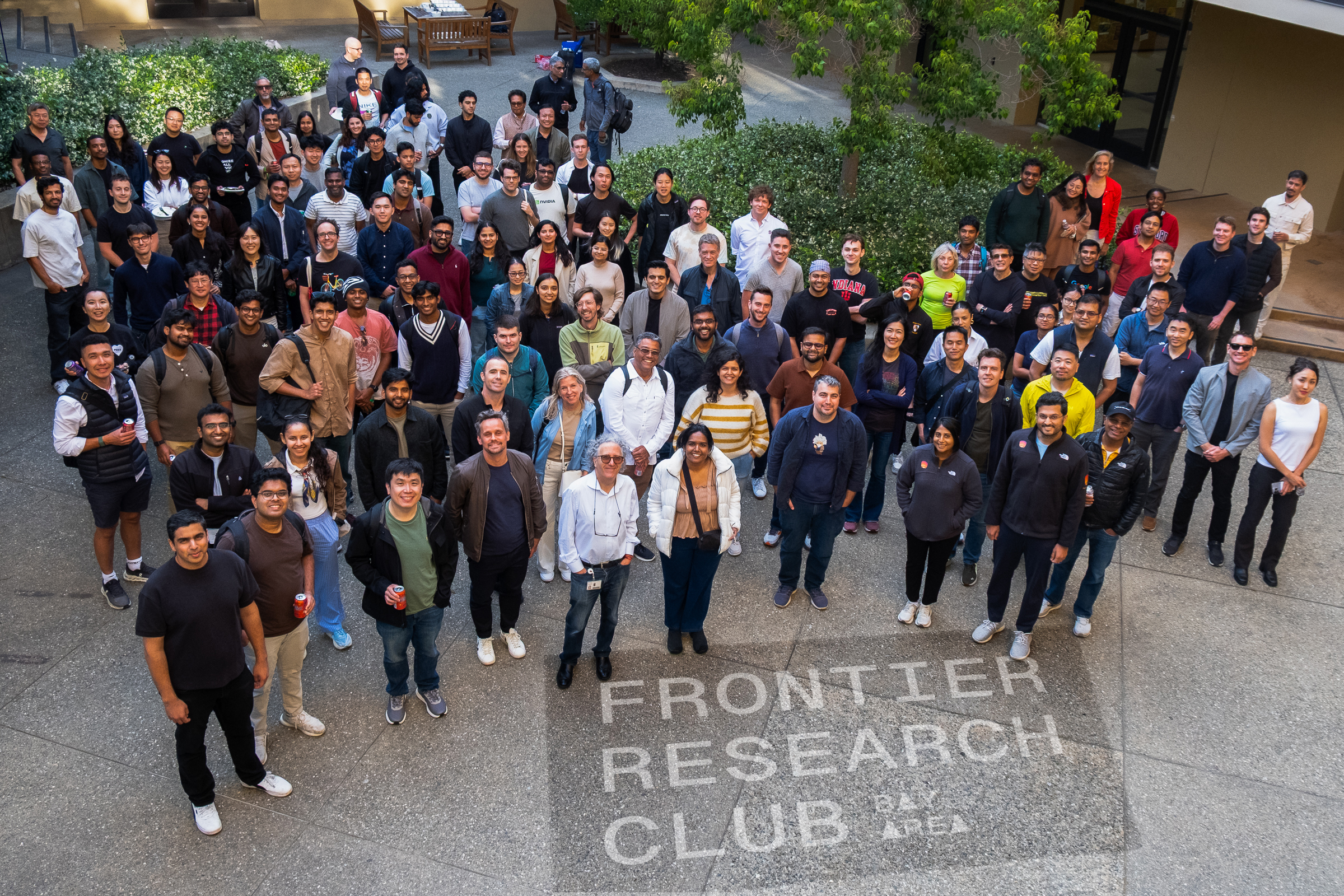
🎥 Last session recap — AGI House SF, August 12
Our first Founders Edition session pointed FRC's one rule — the work speaks — at founders: two technical founders presenting the open research problems inside their companies, paper-discussion style, with real data, falsifiable hypotheses, and deep Q&A. No pitches:
Linda Hong Cheng (Abstract Atomic) — Does Sensor Data Need Its Own Foundation Model?: why the physical world resists today's foundation models — heterogeneous sensor telemetry, sparse events, delayed outcomes — and what an architecture that learns freely but verifies against physical constraints should look like, tested against manufacturing and battery production systems.
Ankit Shah (Aubric) — Verification, Not Detection: a real-time trust layer for AI-generated media that checks claims, platform policy, and brand safety before content ships — and the hard problems underneath: multimodal verification under deployment constraints and learning from imprecise labels at internet scale.
Find presentation recordings on our YouTube channel, @FrontierResearchClub.
Hosted by
Frontier Syndicate is a venture community connecting frontier tech researchers, builders, and investors through curated convenings and early-stage capital. Across the Bay Area, we host a recurring series of research forums, builder nights, and intimate investor dinners — and back exceptional companies emerging from the labs, communities, and technical networks we convene.
Hexo Labs is a neolab for recursive self-improving AI. Their open-source SIA framework is the first to update both the harness AND the model weights of a task-specific agent in the same self-improvement loop — clearing state-of-the-art results across multiple domain benchmarks. Hexo backs the broader research community through grants and direct collaboration on hard problems in science and engineering.
Pebblebed is a technical early stage VC founded by Pam Vagata (cofounder of OpenAI, ran AI for Stripe, inventor of FBLearner Flow); Keith Adams (founded Facebook AI Research, was chief architect at Slack, 20th engineer at VMWare) and Tammie Siew (former Sequoia Southeast Asia investor, former Sequoia & Notable Capital backed founder).

Location
📍 San Francisco, CA
Get a free growth analysis for your company
See how your website, messaging, and go-to-market strategy stack up, in minutes.
Get My Free AnalysisAre you the organizer?
Get a private analytics link , see how many people discover this event via Mimetic.